Estate Planning for Blended Families and Second Marriages in California
Blended families need more than a standard living trust. Here's how to protect your spouse and your children from a prior marriage at the same time.
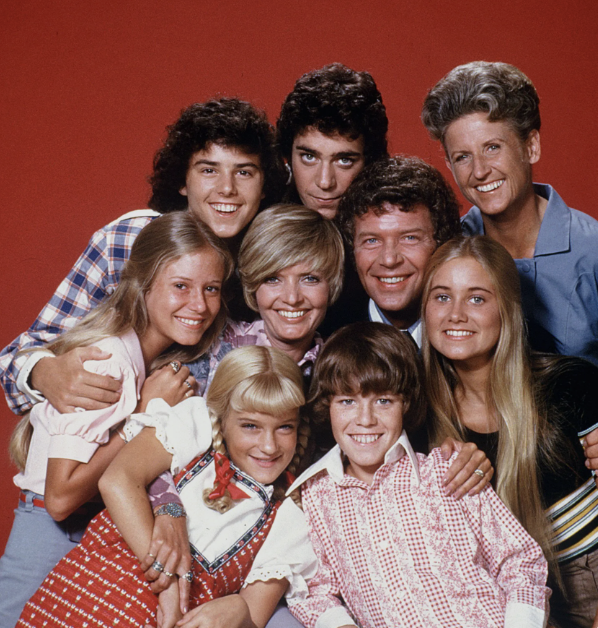
Second marriages can be wonderful, and second-marriage estate plans are complicated.
If you're in a blended family, meaning you or your spouse brought children from a prior relationship, a standard living trust isn't enough. Without careful planning, you can easily end up protecting your spouse at the expense of your children, or protecting your children at the expense of your spouse. Getting both right at the same time requires intentional design.
The Core Problem: Two Sets of People You Love
When couples in a first marriage do their estate planning, the usual approach is straightforward: everything goes to the surviving spouse, and when the surviving spouse dies, everything goes to the kids. Simple.
In a blended family, that simple approach creates a serious problem. If everything goes to your surviving spouse, your spouse is now in complete control of what happens next. Your spouse might update their estate plan to favor their own children. They might remarry. Their new partner might eventually inherit what you spent a lifetime building. And your children, who you intended to provide for, get nothing.
This isn't a criticism of your spouse. It's just what can happen when the plan doesn't account for the full picture.
The Equally Dangerous Opposite Extreme
Some people in second marriages go the other direction: they lock everything up for their kids and leave their spouse too little. The spouse ends up financially vulnerable after the death of the first spouse, potentially unable to maintain their standard of living or stay in the family home.
That outcome is also bad, and it's not what most people intend.
The goal is to provide for both your spouse and your children. The trick is doing it with legal structures that actually hold up.
The Marital Trust: Protecting Both at Once
One of the most effective tools for blended families is a Marital Trust structure, sometimes called a QTIP Trust (Qualified Terminable Interest Property Trust).
Here's how it works. When the first spouse dies, their assets don't go outright to the surviving spouse. Instead, they go into an irrevocable trust that provides income and the use of the assets, including the right to live in the family home, to the surviving spouse for the rest of their life. The surviving spouse is taken care of. They're not left in a difficult position.
But when the surviving spouse later dies, whatever remains in the trust goes to the first spouse's children - not to the surviving spouse's children, not to a new spouse, not to anyone else.
Critically, the surviving spouse cannot change who gets the remainder. They can use the assets and benefit from them, but they can't redirect them. Your children are protected even after you're gone.
It's not a distrustful arrangement. It's a clear-headed acknowledgment that life is complicated, and the plan should be built for the real world.
Community Property Considerations in California
California is a community property state, which means assets acquired during a marriage generally belong equally to both spouses. In a second marriage, this creates complexity immediately.
Assets you brought into the marriage: your home from before the marriage, your pre-marriage retirement savings, and inheritances are your separate property. Assets acquired together during the marriage are community property. The line between them can blur over time, especially if separate property is commingled with community property (for example, if you deposit a pre-marriage inheritance into a joint account).
A good estate plan for a blended family starts with clarity about what's separate and what's community. A prenuptial agreement before the marriage is the cleanest way to establish that clarity. If you didn't do a prenup, it can still be addressed in your estate plan, but it requires more careful drafting.
The Prenuptial Agreement Conversation
A lot of people feel uncomfortable bringing up a prenuptial agreement before a second marriage. It feels like you're anticipating failure. But a prenup isn't about divorce, it's about clarity. It defines what each person brings to the marriage, what remains separate, and how property would be divided in various circumstances.
A prenup also makes estate planning easier because there's less ambiguity to navigate. If you're engaged or recently married and haven't done a prenup, it's not too late to create a postnuptial agreement.
We often work alongside family law attorneys on these matters because the intersection of marriage law and estate planning in a blended family context is where things can go wrong most easily.
Talking to Your Kids About Your Plan
One of the most valuable things you can do in a blended family situation is to communicate your intentions clearly to your children while you're alive. We have written about this before: the surprises that happen at death are the ones that cause the lawsuits.
Your children don't have to see every document. But knowing that you've thought about them, that they're protected in your plan, and that your spouse understands and respects that - that conversation alone can prevent family conflict down the road.
Many of the trust contests and family battles we've seen over the years trace back to a parent who never explained their plan. The children were blindsided. Suspicion turned into accusations. Accusations turned into attorneys.
Clarity about your intentions, while you're still alive to provide it, is essential. It sets expectations and disarms the drama.
Life Insurance as an Equalizer
Sometimes, the most elegant solution to a blended family estate planning challenge involves life insurance.
Suppose you own the family home, which you want to stay in the family after you and your spouse are both gone. You want your spouse to be able to live there during their lifetime. But you also want your children from your prior marriage to receive their fair share.
One approach: leave the home (and its use) to your surviving spouse through a Survivor's Trust, and use a life insurance policy to pass an equivalent amount directly to your children at your death. Your children get their inheritance now. Your spouse keeps the home. Nobody is shortchanged, and there's no battle over the house.
Life insurance is underused in estate planning generally, and it's particularly useful in blended family situations where you're trying to provide for two groups with one pool of assets.
Choosing Trustees and Executors in a Blended Family
In a straightforward first-marriage estate plan, the surviving spouse is usually the successor trustee. In a blended family, that's not always the right answer.
The surviving spouse, as trustee of the Marital Trust, has a fiduciary duty to the remainder beneficiaries (your children). That duty and their personal interest as the income beneficiary can create genuine conflicts. They might be tempted to invest conservatively to preserve income for themselves rather than grow the principal for your children. Or to make discretionary distributions to themselves in ways that deplete the trust.
We often suggest co-trustees of the Marital Trust: the surviving spouse and one of the decedent's children. Both would work together to make decisions about investing and distributions. A professional trustee, a trust company or a neutral individual, can also be a good choice. There's no perfect answer, but it should be thought through deliberately.
There Is No Standard Blended Family Estate Plan
Every blended family is different. How long you've been married, the ages of your children, the nature of your assets, your relationship with your spouse's children, and a dozen other factors determine the right approach.
What we can tell you is that a standard "everything to my spouse" living trust is almost never the right answer for a blended family, and neither is ignoring the problem.
Blended family estate planning has more moving parts than a standard plan, and more ways to get it wrong. A free 15-minute call is a good place to figure out which approach fits your situation
We serve families in person in our El Dorado Hills, Roseville, San Diego, and San Luis Obispo offices, and virtually from anywhere in California.